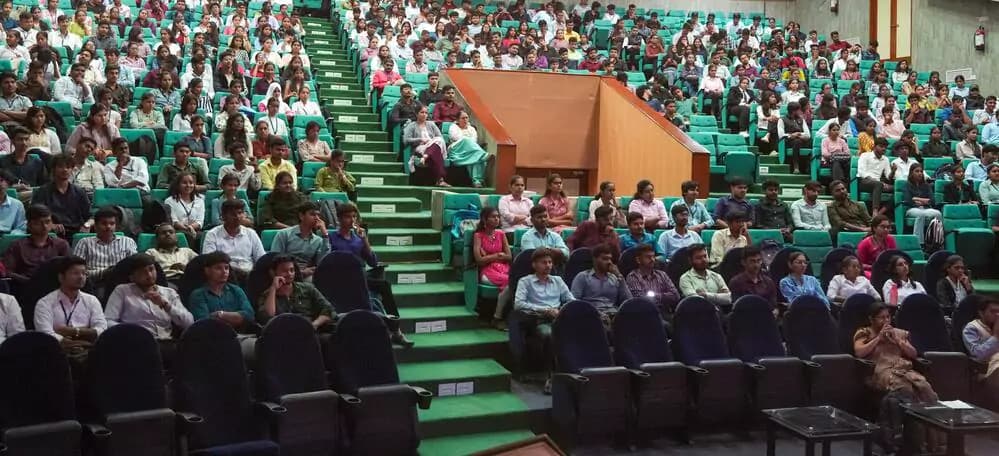
Indira University’s SOIT Students Explore the Topic – “Future of Aviation”
The students of Indira University’s School of Information Technology were privileged to engage in a truly inspiring session with Ms. Priyanka Dank, Data Scientist & AI Strategist at Airbus, Germany, on September 4th in the Dhruv Auditorium. Ms. Dank, with 11+ years of rich experience in Data Science and Artificial Intelligence, holds a Master’s degree in Computer Science from the University of Bonn and has worked across different companies before joining Airbus, gaining broad expertise in applying AI to complex industrial challenges.
She delivered a powerful lecture on “AI in Aviation”, walking the audience through everything from smart technologies soaring in the skies to how our future flights might operate. It was a session rich with insight, innovation, and above all, relevance in today’s rapidly changing world. After leading many transformative projects in Generative AI, Knowledge Graphs, and Computer Vision, she has rich knowledge in automated visual inspections for aircraft, intelligent knowledge assistants that connect complex engineering data, and how Al san e Al White Paper contributes to shaping Airbus’ global AI strategy.
Ms. Dank shared insights on responsible AI adoption, inspiring the NE to break traditional boundaries and society, the next generation. She encouraged students to think beyond and explore how AI can responsibly transform engineering, science, and society. She had an insightful discussion on how modern aviation harnesses artificial intelligence in multiple domains. She explained how Airbus uses AI for knowledge extraction, turning raw documents into usable data and creating a vision. For example, AI plays a key role in detecting objects, assessing damages, and finding anomalies or potential faults before they become safety hazards.
Ms. Priyanka also explained how different platforms are helping optimize flight routes by analyzing large volumes of operational data in real time. It is important to understand how predictive maintenance allows engineers to foresee malfunctions, reducing aircraft downtime and improving safety.
The key takeaway was how AI is no longer “nice to have” but essential. It boosts safety, efficiency, and sustainability. For the students, it was more than a lecture – it was a glimpse into how their studies today could shape the technologies of tomorrow. The session left many energized and thinking about how to contribute to this dynamic field as it continues evolving.